Author: Baia Koguashvili
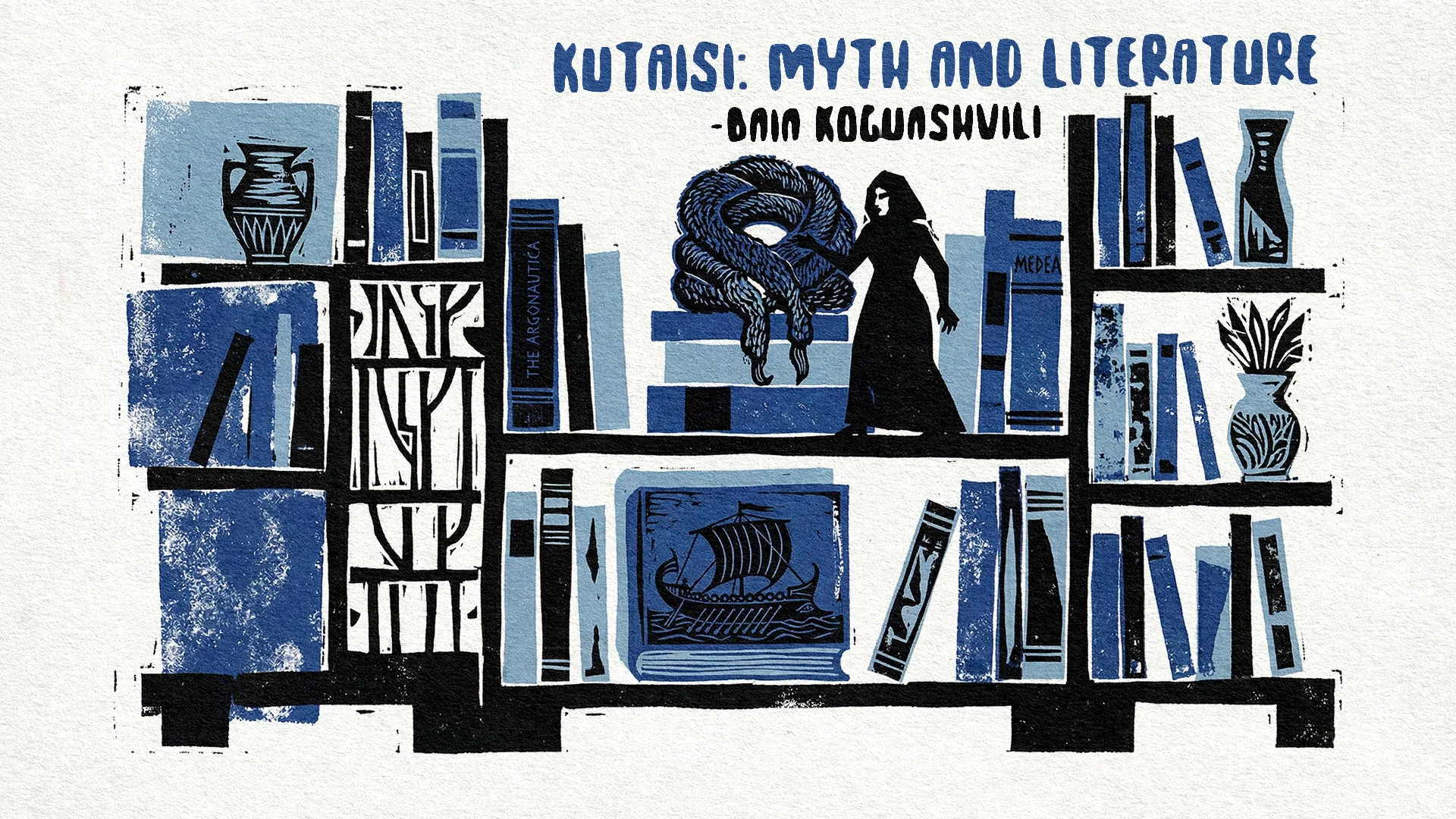
Kutaisi’s mythological and historical past offers countless reasons for pride. Suffice it to say that it has been named among the world’s five oldest cities, and that it is mentioned in literary and historical sources beginning in the 7th century BCE, while the myth of the Argonauts, in which our city is mentioned, is even older than the myth of the Trojan War (14th century BCE), because it involved the sons and grandsons of the Argonaut adventurers.
That is precisely why we decided to dedicate the first international literary festival to myth and literature, a festival that Kutaisi hosted for the first time on November 28-30, 2025, with its status as a UNESCO City of Literature. Organized by the Kutaisi City Hall, the festival became an important cultural platform, bringing together Georgian and foreign researchers, writers, translators, and a broad public of literature enthusiasts.
The festival’s main goal and concept were to present Kutaisi’s rich cultural heritage and contemporary literary processes in an international context: to introduce the city’s historical, mythological, and archaeological heritage from a historical and cultural perspective, and to showcase contemporary literary life.
The festival chronicle is as follows: on November 28, the First International Literary Festival of Kutaisi was hosted by Kutaisi International University. The opening ceremony was held in the conference hall of Building A of the university and was attended by national and city leaders – high-ranking officials who, by their very presence, demonstrated in practice how strongly they support the city and every worthwhile initiative – ministers, ambassadors, members of parliament, state representatives, mayors, rectors of various universities, the university community, representatives of the academic sphere, students, and, simply, lovers of literature. The festival was distinguished by its academic composition. Present were renowned Georgian scholars and researchers from Ivane Javakhishvili Tbilisi State University, Shota Rustaveli State University of Theatre and Film, Akaki Tsereteli State University, the Tbilisi State Conservatoire, Sokhumi State University, the Georgian-American University, Ilia State University, the Georgian Technical University, and Dimitri Janelidze Scientific Research University. Representatives of the Georgian National Academy of Sciences, the Writers’ House, the Kutaisi Central Archive, and the Institutes of Manuscripts and Literature were also actively involved in the festival.
The opening ceremony concluded with performances by the Kutaisi International University Chapel (conductor Zurab Kacharava), the Kutaisi Chamber Choir named after Ioseb Kechakmadze (conductor Irine Lominadze), and the Kutaisi State Academic Song and Dance Ensemble (artistic leader Ketevan Bantsadze), which delighted the large audience in attendance.
On the second day, the festival was hosted by Akaki Tsereteli State University. Special emphasis was placed on the university’s contribution to the development of literature. Since 1933, strong literary schools have been established there, and their representatives – recognized scholars – have been actively engaged in the study of Georgian, classical, English, German, French, and Eastern literature.
Under the aegis of the festival, Kutaisi hosted many distinguished foreign literary figures, including Manfred Jakobs – writer and screenwriter (Austria); Ulrike Jakobs – writer, screenwriter, and director (Austria); Hiroko Masumoto – philologist and professor at Kobe University (Japan); Valeriy Grechko – philologist and professor at the University of Tokyo (Japan); Ute Werner – documentary filmmaker (Germany); Ralph Schock – writer and literary critic (Germany); Maria Angeles Grande Rosales – professor at the University of Granada (Spain); and others.
Attendance at the festival’s academic and cultural events was free of charge, which ensured the broad and active involvement of the public and turned the festival into a genuine popular celebration. The festival’s diverse program brought together academic and creative circles with different intellectual interests, representatives of publishing houses, and a broad audience of literature lovers.
The festival’s academic program was divided into six discussions:
Round Table Discussion I – “Kutaisi: Mythical, Historical, Literary” (moderators: Avtandil Nikoleishvili and Sulkhan Kuprashvili) addressed such issues as Literary Kutaisi in the context of historical development – from ancient mythology and archaeological heritage to the era of the Blue Horns and concluding with Kutaisi as seen through the eyes of European travelers.
The speakers presented the following topics: “Kutaisi (8th Century – 1222)” – Roin Metreveli, President of the Georgian Academy of Sciences; “Hotels in Nineteenth-Century Kutaisi from a Historical and Cultural Perspective” – Merab Kezevadze, Director of the Kutaisi Central Archive; “Medea and Georgian Theatre” – Ketevan Nadareishvili, Associate Professor at Tbilisi State University, and Mariam Kaladze, doctoral student at Tbilisi State University; “The Georgian Queen of Byzantium” – Zaza Abashidze, Director of the National Centre of Manuscripts of Georgia, and Revaz Kldiashvili, writer; “The Blue Horns: Our European Ancestors and the Communist Dictatorship” – Nino Chkhikvishvili, Doctor of Philology, independent researcher; “The Main Tendencies of Nineteenth-Twentieth Century Georgian Literature in Relation to the European Literary Process” – Avtandil Nikoleishvili, professor at Akaki Tsereteli State University.
Round Table Discussion II was dedicated to the problem of “Georgian-Western Literary Relations” (moderator: Alexandre Kartozia). Participants discussed such engaging topics as Friedrich Schiller’s dramas in Giuseppe Verdi’s operas and Zakaria Paliashvili and European culture: intertextual dialogues. The following papers were presented: “The History of German Literature Studies in Georgia: Methods and Priorities” – Konstantine Bregadze, Associate Professor at Tbilisi State University; “The Avant-Garde in Georgia” – Valeriy Grechko, Professor at the University of Tokyo; “For the Publication of Paliashvili’s Mass” – Manana Phkhakadze, Associate Professor at Tbilisi State University, and Tamar Cheishvili, Associate Professor at Ilia State University; “Polish Drama on the Georgian Theatre Stage” – Vera Otskheli, Professor at Akaki Tsereteli State University; “Zakaria Paliashvili and European Culture: Intertextual Dialogues” – Gvantsa Ghvinjilia, Associate Professor at the Tbilisi State Conservatoire; “The Specific Features of Givi Margvelashvili’s Prose” – Alexandre Kartozia, Professor at Tbilisi State University.
Round Table Discussion III – “Literature and Intermediality” (moderator: Lasha Chkhartishvili) was devoted to the interaction of literature with various forms of art, such as visual art, cinema, music, and theatre. The discussion addressed the transformation of text in the newest theatrical directing and Georgian myths, parables, and legends expressed through the language of cinema. The speakers presented the following topics: “Musical Adaptations of Nietzsche’s Zarathustra (Gustav Mahler, Richard Strauss)” – Nanuli Kakauridze, Professor at Akaki Tsereteli State University; “The Reception of Georgian Literature and Art in Japan” – Hiroko Masumoto, Professor at Kobe University; “The Transformation of Text in Contemporary Theatrical Directing” – Lasha Chkhartishvili, Director of the Research Centre for Contemporary Georgian Theatre; “The Transformation of Anton Malczewski’s Poem Maria in Roman Statkowski’s Opera Maria” – Baia Koguashvili, Associate Professor at Akaki Tsereteli State University; “Georgian Myths, Parables, and Legends Voiced in the Language of Cinema” – Lela Ochiuri, Professor at Shota Rustaveli State University of Theatre and Film of Georgia.
Round Table Discussion IV – “Translation as a Dialogue of Cultures” (moderator: Paata Chkheidze) was dedicated to the role of translation in the mutual enrichment of literatures. Participants spoke about translation as a form of intercultural mediation, the problems and prospects of translating Georgian literature into foreign languages, and the Georgian translation heritage. The following papers were presented: “Poetic Translation: A Creative Process or Interpretation of Meaning” – Nana Tonia, Professor at Tbilisi State University; “The Artistic Interpretation of Historical Facts and Myths in Tonino Guerra’s Novel Warm Rain” – Ketevan Tomaradze, writer, publicist, translator; “The Historical Doctor Faustus: Myth, Literature, Reality (Book Announcement)” – Tamaz Gvenetadze, publicist, translator; “T. S. Eliot’s The Love Song of J. Alfred Prufrock: David Tserediani’s Translation” – Paata Chkheidze, translator and professor at Ilia State University.
Round Table Discussion V – “Facets of Soviet and Post-Soviet Georgian Literature” (moderator: Rostom Chkheidze) was devoted to the problems of the main tendencies in Georgian literature from the second half of the twentieth century to the present day, the tragic and heroic dimensions of creative work under the ideological pressure of the Soviet era, the search for personal freedom and the crisis of identity in the transitional period, and the relationship between innovation and tradition in postmodern prose. The following papers were presented: “The Search for Personal Freedom in Post-Soviet Literature (At the Turn of Two Centuries)” – Nino Vakhania, Professor at Sokhumi State University; “Perspectives and Context of Georgian Postmodern Prose: Tradition and Innovation (The Current Literary Process)” – Marine Turava, Professor at Sokhumi State University; “A Retrospective of Kutaisi as a European City” – Elguja Tavberidze, writer and Director of the Kutaisi Publishing Centre; “The Tragedy and Heroism of Writing (The Soviet Era)” – Rostom Chkheidze, translator and professor at the Institute of Georgian Literature.
Round Table Discussion VI – “Literature in the Age of Digital Technologies” (moderator: Tsira Barbakadze) was dedicated to contemporary literary innovations and tendencies. Participants spoke about such topics as literature in the digital age, hypertext and post-digital textuality, the relationship between literature and artificial intelligence, and narratives of identity in contemporary literature. The speakers presented the following topics: “From Hypertext to Algorithm: New Components of Post-Digital Textuality” – Maria Angeles Grande Rosales, Professor at the University of Granada; “Electronic Literature as a New Direction in the Evolution of Contemporary Literature” – Tamar Mebuke, Professor at the Georgian Technical University; “Artificial Intelligence and Literature” – Tsira Barbakadze, writer and professor at the Georgian-American University.
Each time, the audience in attendance was actively involved in the discussions alongside the festival participants.
In addition to the academic program, four book presentations were held at the literary festival:
1. Manfred and Ulrike Jakobs – Die Grenzgangerin: Elisabeth von Lothringen (2007)
2. Paata and Rostom Chkheidzes – T. S. Eliot’s After Strange Gods: Georgian Translation (2025)
3. Irma Ratiani – The Poetics of Drama with a Georgian Accent (2025)
4. Ralph Schock – Nach Kolchis: Faszination Georgien – Reiseimpressionen (2021)
In the reading hall of Akaki Tsereteli State University, Georgian publishers presented their literary output and held meetings with authors. Shorena Shaverdashvili (Shaverdashvili Publishing House) presented the work of Ninia Sadgobelashvili. At the stand of Kentavri Publishing House, books by Nikoloz Tsulukidze, Lasha Chkhartishvili, and Manana Paichadze were displayed and presented by the authors themselves. Akaki Tsereteli State University Publishing House presented Zurab Archvadze’s book On the Reinterpretation of “Phaedra” in the Georgian Language; Elguja Tavberidze, head of the Kutaisi Publishing Centre, presented his own five-volume collection Kutaisi Chronicles; Tbilisi State University Publishing House presented Irma Ratiani’s book The Poetics of Drama with a Georgian Accent (2025); the Writers’ House presented Nana Tonia’s Philostratus the Elder, Pictures; translator Harun Chimke spoke about his own work and shared his translation experience with the audience. Journals published in Kutaisi were also presented: Ganthiadi, Mtsvaneyqvavila, Tetri Khidi, Afinazhi, and the newspaper Ukhimerioni.
It is noteworthy that, after the conclusion of the festival, the books presented by the publishing houses were donated to the library of Akaki Tsereteli State University. This important acquisition will enrich the university’s library holdings and serve as valuable educational material for students and researchers interested in contemporary Georgian literature, translation theory, and literary studies.
The event held in the reading hall of Akaki Tsereteli State University was enriched by a cultural program. The string quartet of the Cultural and Arts Educational Union performed outstanding masterpieces of classical music, creating a special emotional atmosphere and an elevated mood. Displayed in the hall were Otar Kandaria’s illustrated alphabet and bibliographic rarities from the university library collections. A comprehensive and important exhibition of Georgian book illustrations opened at the David Kakabadze Kutaisi Fine Arts Gallery. In one space, collections from two different institutions were exhibited: distinguished examples of Georgian book graphic art preserved in the collections of the Shalva Amiranashvili State Museum of Art and the David Kakabadze Kutaisi Fine Arts Gallery.
The exhibition featured illustrations by Sergo Kobuladze, Shalva Kikodze, Irakli Toidze, Lado Gudiashvili, Lado Grigolia, David Kakabadze, Gulda Kaladze, Tengiz Mirzashvili, Levan Tsutskiridze, Tamar Karbelashvili, Teimuraz Qubaneishvili, Zurab Lezhava, Otar Kandaria, Avto Abesadze, and other artists.
The festival program also included tours of Kutaisi’s landmarks and museums, including the Niko Berdzenishvili Kutaisi State Historical Museum (exhibition: Kutaisi Foliants) and the Vani Archaeological Museum.
The Kutaisi State Academic Song and Dance Ensemble made a particularly strong impression on the foreign delegates.
On the last day of the festival, the Shota Rustaveli State National Theatre presented the play Prometheus Bound at the Lado Meskhishvili Professional State Drama Theatre in Kutaisi. The performance echoed the title of the festival – “Kutaisi: Myth and Literature” – and evoked the sincere admiration of Georgian and foreign guests alike. Mr. Robert Sturua’s direction and the talent of the Rustaveli Theatre actors demonstrated to the foreign delegates the high level and original vision of Georgian theatrical art. The performance became one of the festival’s central events and highlighted the profound philosophical and archetypal values of Georgian culture.
The closing ceremony of the festival was held at the Niko Berdzenishvili Kutaisi State Historical Museum. An indelible impression on festival participants was left by the choirs of the students of the Meliton Balanchivadze Central Music School, a branch of the Kutaisi Cultural-Arts Educational Institutions, and by the folk ensemble Nainai.
At the closing ceremony, the declaration “Kutaisi: A City of Culture, Literature, and Education” was adopted, defining the city’s role in supporting literary processes.
The declaration provides that Kutaisi shall:
• host international scholarly symposia, public academic discussions, and book presentations, and support research and creative projects;
• promote both the translation of Georgian literature into foreign languages and its dissemination abroad, as well as the translation of foreign literature into Georgian and its introduction to Georgian readers;
• transform Kutaisi’s educational-research, cultural, and artistic institutions into venues for creative events and sources of inspiration;
• deepen interdisciplinary cooperation among academic and creative circles;
• respect cultural heritage and literary tradition and support the study of contemporary tendencies in artistic and aesthetic thought;
• actively cooperate with UNESCO and with other members of the UNESCO Cities of Literature network;
• promote Kutaisi’s literary and cultural treasures at international festivals and forums;
• establish a dedicated group of researchers to prepare a bilingual monograph on Kutaisi’s cultural-literary traditions and the contemporary literary process;
• ensure that the Kutaisi International Literary Festival is held once every two years.
The municipality of Kutaisi expressed its readiness to support this very necessary cause.
The First International Literary Festival of Kutaisi, “Kutaisi: Myth and Literature,” once again demonstrated Kutaisi’s growing importance in the international cultural space and highlighted its potential in the development of contemporary literary processes.
The festival turned the late autumn days in Kutaisi into a true celebration. With the financial support of Akaki Tsereteli State University, an informational booklet was published for the festival.
An important contribution to the organization and progress of the festival was made by the Department of Culture, Sports, Education, and Youth Affairs; the Culture Division of the Department of Culture, Sports, Education, and Youth Affairs; Kutaisi International University and Akaki Tsereteli State University; the branch of the Kutaisi Cultural-Arts Educational Institutions; media outlets; and others.
It was noted at the festival that although many of the city’s finest artists, writers, and poets left in the nineteenth and twentieth centuries, and continue to leave today, it is as though they never really left at all, because Kutaisi, by some magical force, continues to draw everyone back. As proof of this, the words of Rezo Gabriadze alone are enough: “Whatever I may be doing, I circle around one small island of my life. That city is Kutaisi. I lived there for only 17 years, and then I went out into the world to wander, but even when I write about Paris, it still comes out as if I am writing about Kutaisi. Kutaisi is the Adriatic; it is a more Mediterranean city, more lyrical, softer.” Once Luka Asatiani said: “We do not have an azure seashore like Batumi, nor do we have the golden brilliance of Tbilisi, but we have another kind of love – we are the city of love.”
This love ran like a leitmotif through the literary festival. We believe that it will make an important contribution to presenting Georgian literature on the international stage and to strengthening Kutaisi’s place on the global literary map. It once again demonstrated the city’s growing significance in the international cultural space and its potential for the development of contemporary literary processes. The festival made it clear that Kutaisi continues to preserve its role as an important cultural center of Georgia and worthily bears the status of a UNESCO City of Literature.
In two years, in 2027, Kutaisi will once again host the literary festival. It will become a tradition and turn our city into one of the modern international literary centers – a living cultural platform that, once again and many times over, will host writers, researchers, and lovers of literature arriving from different parts of the world.
Most importantly, the literary festival, whose theme was the relationship between myth and literature, showed that Kutaisi can take pride in its mythological and historical past, while future generations will certainly be proud of its present as well.